
Osteopathy for Knee Pain & Injury in Victoria, BC
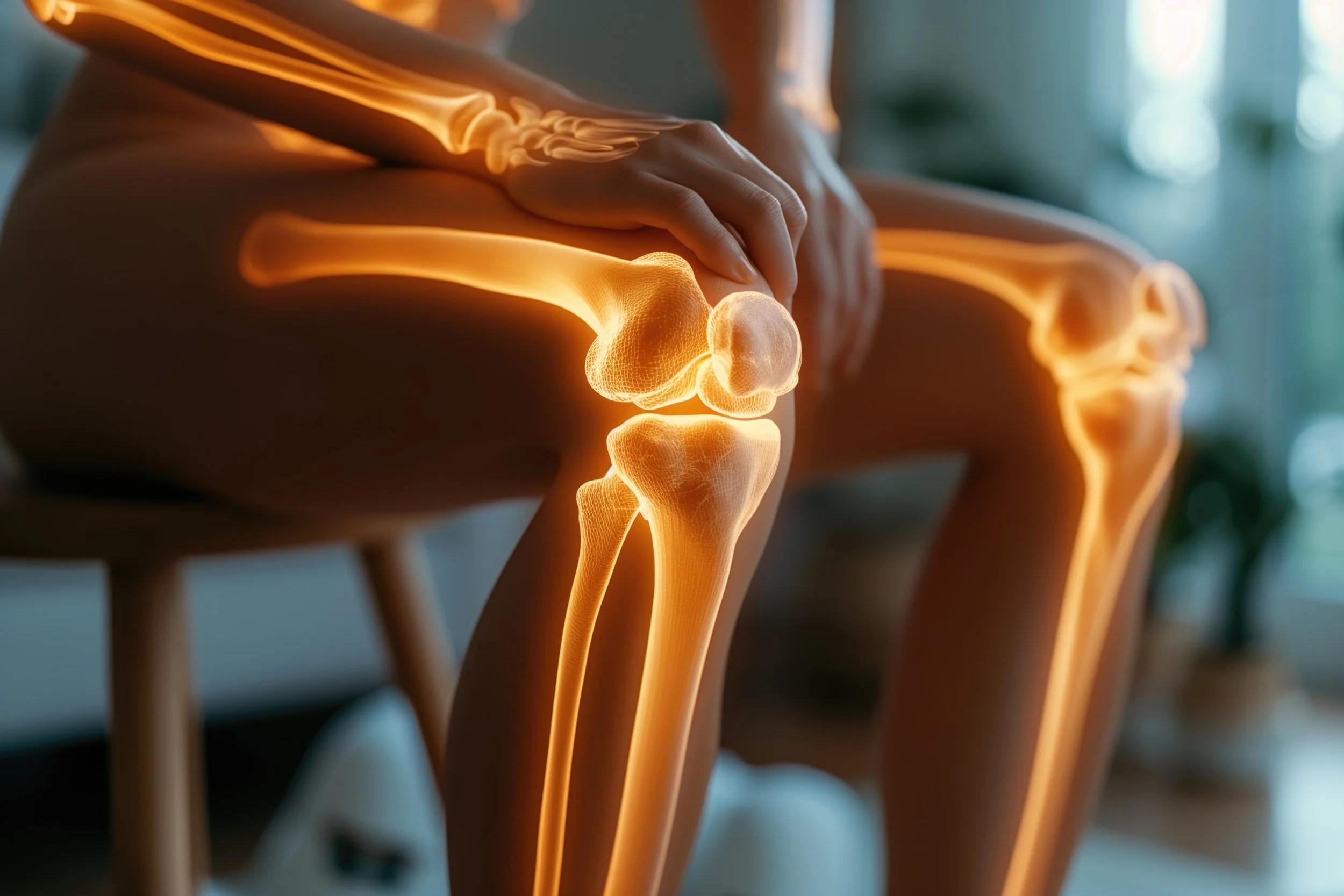
Knee pain is often a result of how the entire body is aligning, moving, and distributing load, especially through the feet, ankles, hips, pelvis, and spine. Osteopathy is a form of manual therapy. I trace the root causes of pain and dysfunction to skeletal misalignments and realign the body. In the knee, pain is commonly influenced by misalignment patterns such as tibial or femoral rotation, restricted movement of the kneecap (patella), ankle and foot collapse or stiffness, hip imbalance, or pelvic and sacral misalignment that alters gait mechanics. When these structures are misaligned causing restriction, the body adapts by creating unequal distributions of muscle tension (muscle imbalances) and joint compression, which can irritate tissues, limit mobility, and increase strain through surrounding regions. In many cases, the pain is not only coming from the painful spot itself, but from restrictions elsewhere that force the knee to compensate, such as limited ankle mobility increasing knee load, hip rotation changing knee tracking and stability, or pelvic imbalance creating asymmetry through the entire body. Treatment begins with a quick assessment of alignment and motion through the full body, then I use hands-on techniques to calm irritated tissues, decompress restricted joints, release muscular and fascial tension, and correct skeletal alignment to relieve pain and support healthier movement patterns throughout the knee and entire body. The goal is to improve overall skeletal alignment head to toe so your knee is not repeatedly pulled back into the same misalignment pattern.
-
Head Injuries
Post-Concussion Syndrome (PCS)
Headaches
Migraines
Whiplash
Neck Injuries
Deviated Septum
TMJD
Shoulder Injuries
Back Injuries
Scoliosis
Sciatica
Piriformis Syndrome
S.I. Joint Dysfunction
Pelvic Alignment
Hand, Wrist, and Elbow Injuries
Nervous System Regulation
Digestive Issues
Shallow Breathing
Hip, Knee, Ankle, and Foot Injuries
Post-pregnancy
Infantile Colic
Complex & Unresolved Cases
And More
-
Our sessions are usually 60+ minutes, depending on how your body responds. I like to focus on what can be achieved in each session rather than adhering to set amounts of time. Some treatments take longer to address deeper issues, while others are more straightforward.
-
Spacing of our sessions is based on progress and regression. At the start, especially with complex cases, I like to keep sessions closer together. This minimizes the window of regression, allowing us to make continuous progress without having to redo work done in previous sessions.
As your body responds and primary adjustments are achieved, treatment frequency gradually tapers: weekly sessions become biweekly → monthly → 2–3 months → 3–6 months → yearly, or until optimal recovery is reached.
-
Easy cases: 1 - 8 sessions
Moderate: 8 - 12 sessions
Complex: 12 - 20+ sessions
-
Condensed treatment plans are utilized for international cases and those travelling from long distances. 3 to 6 weeks is the general timeframe for condensed treatment plans.
-
Perceived Percentage of Recovery (PPR): Is a simple metric used for gauging overall recovery progress. (0%) being in the worst state imaginable and (100%) being back to full function with no sign of symptoms. We use this metric as a communication tool for quick assessment and feedback.
Symptom Tracking Journal: Is an in-depth tracking system used for gauging individual symptom progress. We are continuously adapting to our new normal thus it’s hard to remember how we felt last week, last month or even yesterday. This tracking system helps us become aware of individual symptom changes as they occur.
-
$180 - 30+ minutes
$360 - 60+ minutes
My rates reflect the level of skill, precision, and individualized focus each patient receives.
-
Acupuncture, cupping, and massage therapy pair beautifully with osteopathic care. See the Health Resources page for trusted referrals.
-
Osteopathic treatment is covered through most private insurance and group benefit plans. For those who have coverage, a portion of your treatment expenses should be reimbursed upon submitting your receipts.
ICBC claims seem to be approved for osteopathic treatment on a case by case basis. If you are requesting coverage through ICBC, I can assist by providing a letter to explain why your recovery will be greatly benefited by our treatments.
-
I sterilize all equipment with alcohol before and after each use. Breathing freely and fully is a vital aspect of treatment, therefore, masks are not allowed. In order to ensure optimal results from treatment, there are several protocols that I ask each patient to adopt. These protocols are listed through the patient portal which you will have access to upon acceptance of your case.